Scheduled maintenance
Follow the exact model’s official maintenance table and any applicable time, distance, delivery, or warranty requirements.
Motorcycle maintenance guide · Pakistan
Short answer: use this checklist to prepare and document a workshop visit, but use the exact model’s current owner’s manual, operation guide, warranty requirements, and official service guidance to decide timing, measurements, fluids, quantities, and replacement limits.
When a service visit is due
Follow the exact model’s official maintenance table and any applicable time, distance, delivery, or warranty requirements.
Do not wait when braking, steering, starting, charging, controls, tyres, noise, vibration, heat, smoke, leakage, or warning behavior changes.
Arrange checks after flood or deep-water exposure, a collision or hard impact, extended storage, unusual overloading, or another event that may affect safety or condition.
No universal interval: CD70, Pridor, CG125 variants, CB125F, CG150, CB150F, and ICON e: do not all share one maintenance schedule or one set of consumables. The exact model document controls.
Before handing over the motorcycle
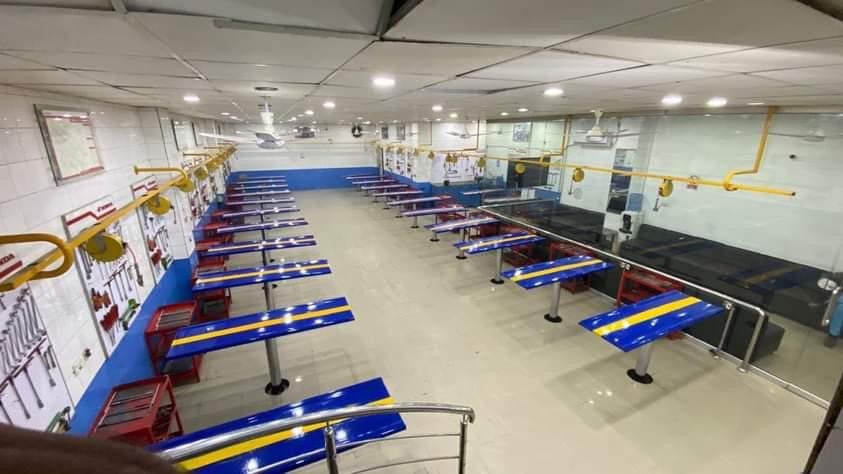
Petrol-motorcycle inspection groups
Confirm the exact model document, previous work, odometer, warranty context, customer concerns, and any overdue follow-up. Use the source-checked periodic chart families and next-milestone planner instead of a universal “tuning” interval. For petrol-engine tappet work, preserve the exact valve-clearance Inspect checkpoint and no-guessed-mm boundary.
Use the exact model’s specified grade, standard, quantity, and timing. Check for leakage, contamination, overfill or underfill, and record the product used. Petrol-engine oil tasks do not apply to ICON e:. The source-checked oil matrix and private odometer planner keep pack size, normal replacement and after-disassembly capacity separate.
Use the exact model’s full printed plug code, published gap and chart action. Keep Inspect and Replace separate, record condition and related ignition findings, and do not transfer petrol tasks to ICON e:. The source-checked code matrix and private odometer finder preserve the 0.6–0.7 mm and 0.8–0.9 mm groups without projecting beyond the displayed schedule.
Inspect the model-relevant air cleaner, spark plug, fuel delivery, hoses, connections, and signs of leakage or restriction according to the official document. Keep Inspect, Clean and Replace separate with the exact-model air-cleaner chart and private odometer finder; its unpaved-use boundary can move inspection earlier without inventing a kilometre. Keep engine-idle-speed Inspect separate from carburetor Clean or Clean-and-Adjust with the exact-model carburetor and idle-speed chart finder; do not authorize a guessed RPM, screw direction or turn count. For a repeated consumption change, bring complete fill records from the fuel-average measurement guide instead of relying on a copied km/L claim.
Check model-specified slack, lubrication, alignment, tight spots, damage, and sprocket wear. Adjustment or replacement should follow the exact limits and method. Use the source-checked 500-km interval, missing-public-slack-page disclosure and private exact-range recorder rather than a copied universal number.
Inspect operation, release, free play where applicable, cables or hydraulic condition, shoe or pad wear, drum or disc condition, leakage, heat, switches and braking behavior. Use the source-checked drum, front-disc/rear-drum and ICON e combined-brake routes; any weakness, drag, heat, leakage, grinding, pulling or vibration overrides a routine checkpoint.
Check cold pressure against the exact model specification, tread and damage, valve condition, wheel or spoke condition, bearings, alignment, and axle security. Use the current rider-only and rider-plus-passenger tyre matrix instead of a generic number.
Check throttle and clutch operation where fitted, cables, levers, handlebar movement, steering play, forks, rear suspension, leakage, damage, and mounting security. For the nine current petrol models, use the published 10–20 mm clutch-lever range, exact chart family and slip/drag/control-fault route; ICON e has front and rear brake levers rather than this petrol clutch route.
Check the model-relevant battery and charging system, starter, switches, horn, headlight, tail and brake light, indicators, connections, and warning display behavior. Use the exact-model battery matrix and private fitment brief to separate 2.5Ah, 6Ah, 7Ah and ICON e traction-battery routes; voltage and capacity alone do not approve a replacement.
Inspect critical fasteners, stands, guards, exhaust mounting, visible leakage, and completed work. Confirm control operation and any safe, authorized quality check before handover.
Electric-model boundary
ICON e: uses an electric motor and traction battery, so petrol-engine tasks such as engine-oil, spark-plug, fuel-system, and engine-intake maintenance must not be copied onto it. Use the current ICON e: operation, safety, service, and warranty documents for its battery, charging equipment, motor, combined braking system, tyres, controls, electrical system, storage, and inspection requirements.
Do not open or repair high-voltage or traction-battery components without the required trained service process. Report charging damage, unusual heat, smoke, smell, impact, water exposure, warning indications, or battery damage promptly and follow the official safety instructions.
Open the Honda ICON e: model page and documentsBefore paying and leaving
| Record | What to confirm |
|---|---|
| Motorcycle identity | Correct model or variant, registration or customer reference where used, odometer, and service date. |
| Customer concerns | The symptoms or requested checks recorded in clear language rather than a generic “tune-up” label. |
| Inspection findings | What was checked, what was within specification, what needs monitoring, and what requires action. |
| Approved work | The tasks you authorized, including any difference between the initial estimate and completed work. |
| Parts and consumables | Itemized part or product identification, application, quantity or specification where relevant, price, and source traceability. |
| Quality and follow-up | Technician or final-check status, unresolved concerns, safe-use advice, and the next model-specific follow-up point. |
Retain the final invoice or job card with the owner, warranty, delivery, and previous service documents. Use the service-schedule and tuning guide for exact periodic chart columns and free-service separation; the drive-chain care guide for interval, source range and condition records; the battery guide for exact voltage/capacity, test findings and complete replacement-fitment records; the spark plug guide for the complete printed code, gap, Inspect/Replace action and odometer record; the air-cleaner guide for exact I/C/R actions, unpaved-use escalation and element-service records; the clutch guide for measured free play, schedule family, observed behavior and repair records; the Atlas Honda warranty and claim guide for the two current petrol-model free-service schedules and claim records; the separate engine-oil guide for exact oil-change intervals and quantities; the Lahore parts-desk guide for a current local part request; and the genuine Atlas Honda spare-parts verification guide for source checks.
Primary guidance
Atlas Honda has publicly stated that the owner’s manual supplied with a motorcycle contains operation, safe-use, and maintenance information. The current official website also directs customers to its service options. Ghaffar Honda Center’s model pages expose the available operation, safety, specification, toolkit, and delivery documents for each model.
Frequently asked questions
Follow the timing and maintenance table for the exact model in its current owner’s manual, operation guide, warranty documents, and official dealership guidance. Do not apply one universal interval to every model.
Bring relevant model, delivery, warranty, and previous service documents; record the odometer; and note when any symptoms or recent events occur.
Use only the grade, standard, quantity, and timing stated for the exact petrol motorcycle in its current official documents. ICON e: is electric and must not be assigned petrol-engine oil tasks. Open the exact-model Atlas Honda engine-oil guide for the current published matrix and source links.
No. Stop riding when continued use may be unsafe and arrange prompt inspection for significant braking, steering, tyre, wheel, suspension, control, leakage, heat, smoke, or electrical changes.
It should identify the motorcycle and odometer, customer concerns, findings, approved work, installed parts and consumables, charges, quality-check status, and follow-up guidance.
If the motorcycle will not start, starts only with choke, self-start is silent or weak, cuts out, or ICON e does not show READY, first use the exact-model starting-problem route. Preserve cold/warm state, indicators, sound, engine response, recent work and hazard observations before authorizing an adjustment or part.
Use the local service-center guide to prepare booking, safe arrival, job-card scope, authorization, completion, and follow-up; use this checklist for the exact-model inspection and record questions.
Do not wait for the next periodic column when power falls, the engine feels tight, smoke, burning smell, leakage, warning changes or abnormal sound appears. Use the exact air-cooled petrol versus ICON e heat and smoke route, stop for hazards, and attach the observable evidence to the job card.
Do not wait for the next periodic column after a new knock, rattle, clunk, grinding sound or vibration. Use the exact-model engine, clutch, chain, wheel, brake, body and ICON e route, prioritize control and mechanical danger, and attach the observed behavior—not a guessed part—to the job card.
The petrol schedule marks suspension Inspect at each displayed checkpoint, but a new control symptom, impact or leak does not wait for the next column. Use the exact-model steering and suspension route and attach tyre, wheel, brake, load, road, impact and recent-work evidence to the job card.
Do not wait for a periodic column after unintended drive, wheel lock, a hard or non-returning control, severe grinding or gear jump. Use the exact-model gear-shifting route and attach clutch, specified oil, final-drive, damage and recent-work evidence—not an internal-parts guess—to the job card.
Do not wait for the next periodic column and do not start the motorcycle to locate it. Use the exact-model petrol-leak and fuel-smell route; attach tank, cap, ON/OFF/RES, wet-path, heat, fall, refuelling and recent-work evidence—not a guessed carburetor part—to the job card.
Do not wait for the next periodic column when an essential headlight, indicator, horn, stop light, warning or display is unreliable. Use the exact-model electrical route; attach the full working/failed group, operating state, fuse event, recent work, impact and water evidence—not a guessed electrical part—to the job card.
Run the exact-model Honda motorcycle pre-ride inspection before first movement. It checks tyre, brake, control, energy, fluid, final-drive and light or warning evidence, puts dangerous observations first, and keeps ICON e separate from petrol, engine-oil, clutch and chain instructions.