
A valid recommendation is tied to the measured job, rider population, setup and support geography.
Field teams · courier · delivery · department fleets
Motorcycle selection for field and delivery work
Choose the duty cycle first, then prove the configuration through current model facts, rider and carried-item boundaries, a representative pilot, total cost, uptime and after-sales support.
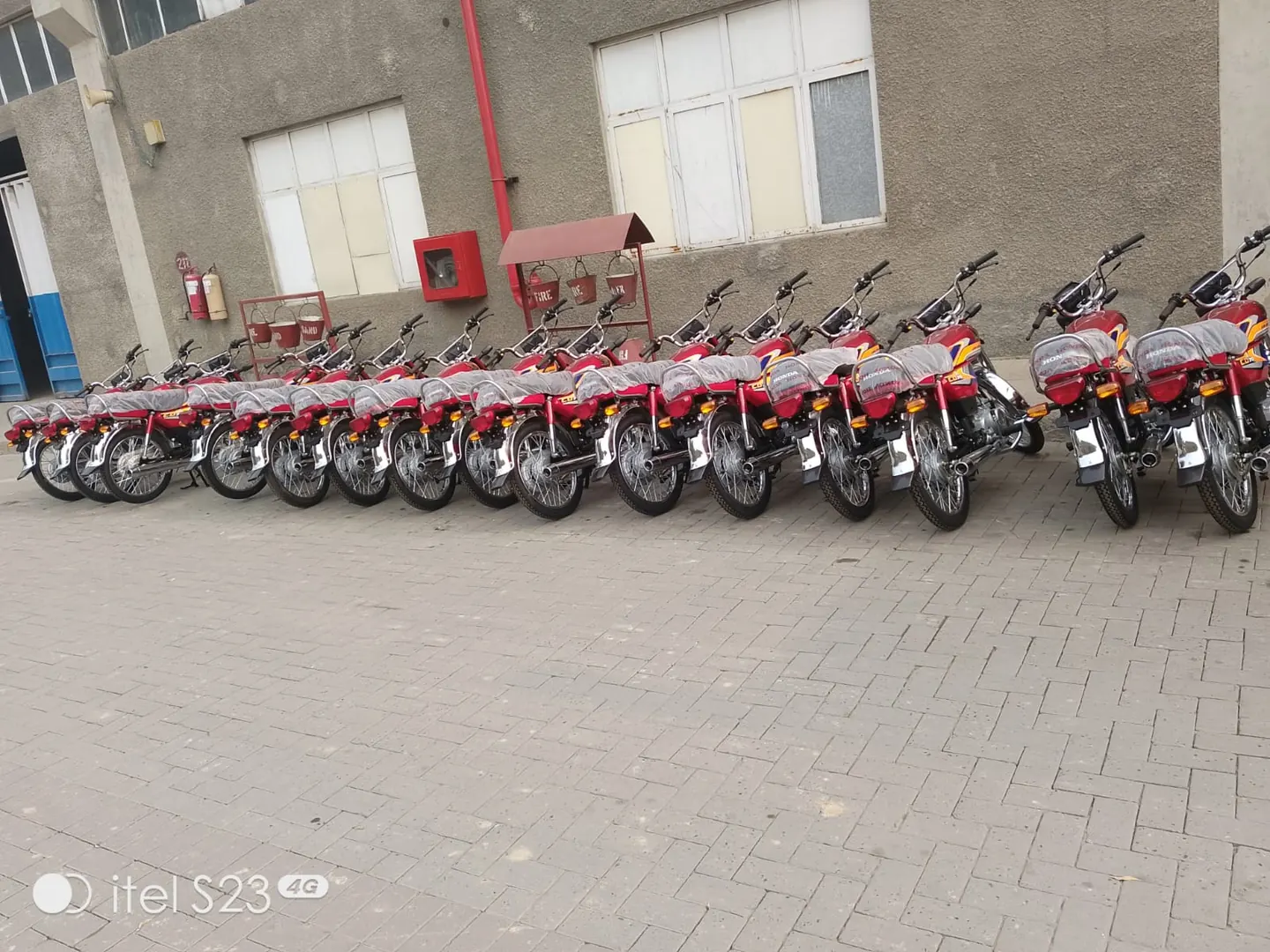
Published configuration is retained; missing fuel economy, payload and weight fields are not invented.
Measure real distance, stops, energy, assignments, downtime, service, cargo condition and rider feedback.
Purchase price alone cannot represent energy, maintenance, parts, administration or work interruption.
Direct answer
What is the best motorcycle for field staff or delivery work?
The best defensible choice is the configuration that completes the organization’s measured typical and longest realistic workdays within rider, carried-item, energy, service, safety, warranty and budget boundaries—and then passes a representative pilot and whole-life cost comparison. Engine size, lowest price, claimed mileage, resale reputation or one rider’s preference cannot prove that result.
Use this framework for employee field visits, document movement, courier work, product or food delivery, collections, inspections and other lawful organizational travel. Passenger-carrying or ride-hailing is a different duty cycle and must be documented separately.
| Requirement group | Evidence to collect | Decision boundary |
|---|---|---|
| Operating purpose | Assignments, service-level expectation, locations, shift pattern, responsible department and prohibited uses | One configuration is not assumed to cover delivery, passenger, field-sales and inspection work equally. |
| Route and stops | Typical and longest daily distance, stops, detours, waiting, peak periods, return-to-base pattern and road/parking conditions | Use a demanding lawful day, not a best-case map distance. |
| Rider population | Rider fit range, experience, licence/training route, protective equipment, shift rotation and feedback process | Test secured stationary fit and trained real-route operation; do not choose for one manager's body size. |
| Passenger and carried items | Frequency, measured maximum mass, dimensions, fragility, temperature control, security, weather and loading method | Do not infer payload from engine size, appearance or ICON e's two-person riding-capacity field. |
| Starting and parking | Starts per day, kick-start acceptability, self-start requirement, walking/parking movement, steering space and theft controls | Frequent stops may make starting method material, but it is not a complete model recommendation. |
| Petrol or charging | Reliable locations, time, queue, metering, security, backup, longest gap and recovery plan | Electric only proceeds with practical route margin and resilient charging; petrol access is also mapped. |
| Service and parts | Service geography, exact-model schedule, job cards, genuine-parts route, planned downtime, recovery and substitute mobility | Uptime is designed before purchase rather than discovered after the first breakdown or missed service. |
| Commercial scope | Current written price, setup, rack or box, registration, insurance, taxes/fees, finance, delivery and exclusions | Compare complete compliant totals on the same scope, not headline unit price. |
| Warranty and use | Registered owner, exact work type, passenger pattern, load, modifications, service records, claim route and escalation | Obtain current written interpretation; do not assume delivery and taxi use are identical or unrelated. |
| Governance | Approver, evaluator, pilot owner, safety owner, fleet custodian, records, review date and change control | No scale-up until evidence, exceptions and ownership are documented. |
Scenario-led shortlist
Use model groups to test requirements—not to declare a winner
These current official facts can narrow the field. None is a claim about fuel economy, comfort, payload, durability, route performance, resale, stock or institutional price.
CD70 and CD70 Dream
Each is currently listed at 82 kg dry weight, 72 cm3, four speeds, kick-start and 136 mm ground clearance. Test rider fit, stopping pattern, carried-item setup and route rather than treating low mass as universal suitability.
Pridor
Currently listed at 97.1 cm3, 96 kg, 798 mm seat height, kick-start and 156 mm ground clearance. These are selection inputs—not proof of comfort, economy or rough-road capability.
CG125
Currently listed at 100 kg, 764 mm seat height, 132 mm ground clearance, kick-start and four speeds. Confirm whether repeated kick starts, rider fit and the complete duty cycle satisfy the requirement.
CG125S, CG125S Gold and CB125F
All three list self-start plus kick-start and five speeds. CG125S variants are listed at 108 kg; CB125F at 122 kg. Compare dimensions, seat height, clearance, stationary handling and pilot evidence.
ICON e:
Currently listed at 86 kg, 1.58 kW, Standard/Econ modes, 53/65 km published range and 150 kg two-person riding capacity. Treat range as rated, not guaranteed, and do not re-label riding capacity as cargo payload.
CG150 and CB150F
Both list 149.2 cm3, self-start plus kick-start, five speeds and higher published clearance than several smaller models. CB150F lists 124 kg; CG150 does not publish dry weight in its current entry. Larger format is not automatic work suitability.
Shortlist discipline: eliminate only on a stated requirement. “Famous,” “strong,” “best average,” “good resale,” “comfortable” or “heavy duty” is not evidence unless the organization defines the measure and tests or sources it comparably.
Current published comparison
Facts that can materially change a work-use shortlist
Official pages were rechecked on 29 August 2026. Missing fields remain missing. Use the dated retail price guide only as a reference; institutional pricing requires a current written quotation.
| Model | Power format | Start / modes | Transmission | Published mass | Seat height | Ground clearance |
|---|---|---|---|---|---|---|
| CD70 | 72 cm3 petrol | Kick | 4 speed | 82 kg | Not listed | 136 mm |
| CD70 Dream | 72 cm3 petrol | Kick | 4 speed | 82 kg | Not listed | 136 mm |
| Pridor | 97.1 cm3 petrol | Kick | 4 speed | 96 kg | 798 mm | 156 mm |
| CG125 | Petrol; displacement omitted in local catalogue field | Kick | 4 speed | 100 kg | 764 mm | 132 mm |
| CG125S | 124.1 cm3 petrol | Self + kick | 5 speed | 108 kg | 765 mm | 133 mm |
| CG125S Gold | 124.1 cm3 petrol | Self + kick | 5 speed | 108 kg | 765 mm | 133 mm |
| CB125F | 124.1 cm3 petrol | Self + kick | 5 speed | 122 kg | 789 mm | 120 mm |
| ICON e: | 1.58 kW electric | Standard / Econ | Electric drive | 86 kg | Not listed | 132 mm |
| CG150 | 149.2 cm3 petrol | Self + kick | 5 speed | Not listed | 773 mm | 171 mm |
| CB150F | 149.2 cm3 petrol | Self + kick | 5 speed | 124 kg | 766 mm | 168 mm |
ICON e boundary: Atlas Honda currently publishes 53 km Standard and 65 km Econ range and labels 150 kg as riding capacity for two persons. Actual range changes with route, stops, speed, rider and carried-item pattern, weather, battery condition and charging. No electric fleet should be approved from rated range alone, and no cargo limit should be inferred from the two-person field.
Ten-stage selection process
From operating job to controlled fleet rollout
The recommendation becomes auditable when every step has a named owner, source, record and decision.
Define job and governance
Purpose, approvals, locations, quantity, timeline, responsible fleet owner and procurement route.
Measure the duty cycle
Typical and longest day, stops, detours, waiting, peak periods, return pattern, roads and parking.
Define rider and carried items
Fit range, training, passenger use, measured mass/dimensions, mounting, weather and security.
Map energy feasibility
Petrol or charging location, time, queue, metering, security, backup, margin and recovery.
Build the fact shortlist
Use current model configuration and documents; leave unsupported economy, comfort and payload blank.
Check fit and setup
Secured stationary reach, controls, parking movement, passenger space and proposed cargo attachment.
Run a representative pilot
Trained riders, real lawful routes and normal work items, including demanding operating days.
Compare TCO and uptime
Same commercial scope, measured energy, maintenance, parts, administration and downtime.
Verify after-sales support
Delivery, documents, warranty, service geography, parts, job cards, recovery and escalation.
Control the rollout
Approved configuration, quantity, training, assignment, maintenance, records, review and change owner.
Representative pilot
What to measure before buying at scale
A pilot should represent ordinary work and demanding but lawful days. It should not abuse the motorcycle, expose riders to unsafe conditions, or treat one good trip as proof.
| Pilot measure | Record | Decision use |
|---|---|---|
| Work completed | Assignments planned/completed, failed or delayed jobs, stops and service-level exceptions | Does the configuration complete the actual job, not only move the rider? |
| Distance and route | Typical, longest, detours, waiting, return-to-base and road/parking conditions | Are range, fueling/charging and recovery assumptions resilient? |
| Rider and carried items | Rider, passenger if applicable, measured items, mounting, condition at handover and route changes | Does the approved setup remain usable and controlled across the rider population? |
| Fuel or electricity | Fuel issued/purchased or charging-meter data, dates, distance and incomplete charging events | Produce route-relevant measured efficiency with a stated method—not a universal mileage claim. |
| Availability | Hours scheduled, hours unavailable, cause, recovery, substitute transport and lost work | Quantify uptime and avoid double-counting downtime in TCO. |
| Service and parts | Scheduled/unscheduled work, job cards, parts, labour, waiting, repeat concerns and support response | Test the real after-sales system and forecast workload before scaling. |
| Safety and cargo condition | Reported hazards, control issues, instability, heat/water exposure, cargo damage, near misses and corrective action | Stop unsafe configurations; do not trade safety for completion rate. |
| Rider feedback | Fit, control access, start/stop workflow, parking, visibility, fatigue indicators and training gaps | Use structured questions across riders; do not convert preference alone into technical proof. |
Set approval thresholds before the pilot
Define minimum completion, maximum unplanned downtime, allowed support response, charging/fueling failure tolerance, cargo-condition standard, safety stop rules and evidence completeness before results are known.
Retest a changed configuration
A different rack, box, tyre, route, rider population, shift, charging site, carried-item mass, maintenance plan or software/process assumption can change the result. Route the change through approval, use the current exact-model tyre-size and rider/passenger pressure reference, and repeat the affected checks.
Whole-life decision
Price, uptime and support must be evaluated together
Total cost
Use the fleet TCO calculator for acquisition/setup, energy, maintenance/parts, recurring administration, downtime, financing, other cost and residual assumptions on a common period.
Preventive maintenance
Use the fleet maintenance planner to build exact-model, distance, calendar, condition and event triggers without inventing universal intervals.
Procurement and acceptance
Use the procurement checklist for comparable quotations, supplier verification, evaluation, PO controls, delivery acceptance and after-sales records.
Current retail reference
Use the dated official price guide only as a reference. Require current institutional unit/total price, taxes, setup, delivery, validity and exclusions in writing.
Warranty and claim route
Review the source-backed warranty guide, then record the exact organizational owner, work use, setup, service records, claim contact and escalation terms.
Delivery and records
Match every unit to the approved configuration, invoice, identifier schedule, documents, supplied items and acceptance record; write discrepancies before sign-off and assignment.
Work-use, setup and warranty boundary
Do not hide commercial use or cargo changes
The current petrol warranty panels list taxi use, excessive load, racing and non-standard changes among no-claim conditions. This does not prove that every field visit or delivery assignment is automatically excluded, and it does not prove that passenger ride-hailing is equivalent to parcel delivery. State the exact use, passenger pattern, measured carried items, rack/box and other changes. Obtain the current written technical and warranty interpretation before purchase or modification, and keep the approved setup and service records.
Any rack, box or equipment must be evaluated for exact-model application, secure mounting, rider movement, steering, suspension and braking effects, heat and moving-part clearance, lights, reflectors, plate visibility, cargo containment, weather, emergency access and applicable current law. A search article cannot approve a modification or payload.
Choose the correct contact route
Individual rider or organization?
Individual delivery or field rider
Use the main dealership model pages and daily-commuter framework for personal route, fit, starting, parking, petrol/charging and current transaction checks. An individual purchase does not need a corporate procurement workflow.
Company, department or managed fleet
Use the institutional inquiry for quantities, locations, duty cycle, approved setup, pilot, comparable quotation, delivery, documentation, registration responsibility, service, parts, warranty, uptime and escalation planning.
Current source routes
Verify models, support and transaction inputs
Atlas Honda — current motorcycle catalogueOfficial lineup and exact product links used for the current model set.
Atlas Honda — ICON e:Official electric specifications, rated range and two-person riding-capacity field.
Atlas Honda — Find a DealerCurrent official network locator for dealership and support verification.
Atlas Honda — Operation GuideCurrent exact-model operation, safety and care document entry point.
Ghaffar Honda — dated price referenceOfficial-page observations with colour-specific CG150 and CB150F ranges.
Ghaffar Honda — warranty source guideCurrent petrol-panel periods, two free-service schedules and work-use boundaries.
Frequently asked questions
Fast answers for field and delivery motorcycle selection
What is the best motorcycle for field staff or delivery work in Pakistan?
There is no universal best. Choose the configuration that completes the measured duty cycle within rider, carried-item, energy, service, safety, warranty and budget boundaries, then proves itself in a representative pilot and whole-life cost comparison.
Is Honda CD70 automatically the best bike for delivery riders?
No. Its current 82 kg, 72 cm3, kick-start, four-speed format may place it on a frequent-stop shortlist, but does not prove fit, load suitability, fuel economy, comfort, durability, route performance, uptime or TCO.
Which current models have self-start for frequent stops?
CG125S, CG125S Gold, CB125F, CG150 and CB150F currently list self-start plus kick-start. CG125, CD70, CD70 Dream and Pridor list kick-start. Starting method is only one requirement.
Can ICON e be used for delivery work?
Only shortlist it after measuring charging reliability, routes, detours, waiting, load, weather, security, downtime and practical margin below its current 53 km Standard / 65 km Econ rated ranges. Obtain current electric warranty and service terms in writing.
Does ICON e's 150 kg riding capacity mean 150 kg cargo?
No. The official page labels it riding capacity for two persons. Confirm rider, passenger, carried items, rack/box, mounting and operating limits through the exact current technical route.
How much electric range reserve should the fleet keep?
No universal percentage fits every operation. Approve a conservative margin from measured variation, detours, waiting, rider and carried-item pattern, temperature, battery condition, charging reliability, missed charging and recovery.
What fuel average should the company assume?
Do not use an unsupported universal number. Measure fuel and distance during a route-relevant pilot, state the method and conditions, then stress-test a worse efficiency case in TCO.
Should the lowest purchase price win?
No. Compare complete compliant acquisition/setup, energy, maintenance, parts, administration, downtime, financing where applicable and residual assumptions, plus delivery, documents, warranty, support and pilot evidence.
What should the pilot measure?
Planned/actual distance, stops, assignments, rider and items, fuel/charging, unavailable time, service/repair, cargo condition, safety observations, fit/feedback, route exceptions and support response.
Is delivery the same as passenger taxi or ride-hailing for warranty?
Do not assume. The current petrol panels list taxi use, excessive load and non-standard changes among no-claim conditions. State the exact use and setup, then obtain current written interpretation.
Turn the operating job into a comparable requirement
Request institutional motorcycle selection and pilot guidance
Share the organization type, locations, quantity, typical/longest daily distance, stops, rider/passenger pattern, measured carried items, petrol or charging access, delivery timeline and required after-sales support. Keep personal identity, credentials and complete vehicle identifiers out of the initial inquiry.
Pilot noise and vibration control
Record behavior by route, load and road surface.
During the pilot, use the retail exact-model noise and vibration framework to capture idle, RPM, clutch/gear, speed, braking, bumps, handlebar/seat/footrest and ICON e events. Stop signs and verified findings should drive selection—not anecdotes or one rider's sound description.
Pilot steering and suspension control
Record route, load, surface and control evidence.
Use the retail exact-model steering and suspension framework to capture wobble, pull, front and rear response, leakage, steering feel, impact and recent-work events. Stop-use findings and verified inspection—not rider anecdotes or cross-model swaps—should drive selection.
Pilot gear and drive-control evidence
Record exact family, controls and unintended-drive events.
Use the retail exact-model gear-shifting framework to distinguish four-speed, five-speed and ICON e routes and capture hard or stuck shifts, false neutral, creep, lever return, clunk, damage and recent work. Stop-use findings—not anecdotes or forced tests—should drive selection.
Pilot fuel-system evidence
Record leakage, vapour, refuelling and safety-surface events.
Use the retail exact-model fuel-safety framework to preserve tank, reserve, ON/OFF/RES, cap, wet path, heat, fall, transport and recent work. A stop-use event and trained finding—not a start test or anecdotal parts diagnosis—should drive pilot and fleet selection.
Pilot electrical evidence
Record visibility, signalling, warning and power events during the pilot.
Use the retail exact-model electrical framework for headlight, indicator, horn, stop-light, fuse, dim/flicker, multi-failure and display changes. Preserve the operating state, route/light conditions, recent work, impact and water evidence; a trained finding—not an unverified LED, relay, battery or wiring modification—should drive selection.
Engine-oil condition route
Carry oil-leak controls into the pilot
Use the retail exact-model oil-leak evidence route to define rider stop signs, parked-surface observations, level records, recent-work fields, safe recovery and workshop findings. Pilot selection should use repeated verified evidence—not an anecdote or guessed component.
Exhaust-smoke evidence route
Carry smoke and carbon-monoxide controls into the pilot
Use the retail exact-model exhaust-smoke route to define enclosed-space, fire, oil-loss and electric stop signs plus source, timing and recent-work fields. Pilot selection should use repeatable measured findings—not rider anecdotes or colour-based diagnoses.
Before every ride
Run the exact-model Honda motorcycle pre-ride inspection before first movement. It checks tyre, brake, control, energy, fluid, final-drive and light or warning evidence, puts dangerous observations first, and keeps ICON e separate from petrol, engine-oil, clutch and chain instructions.